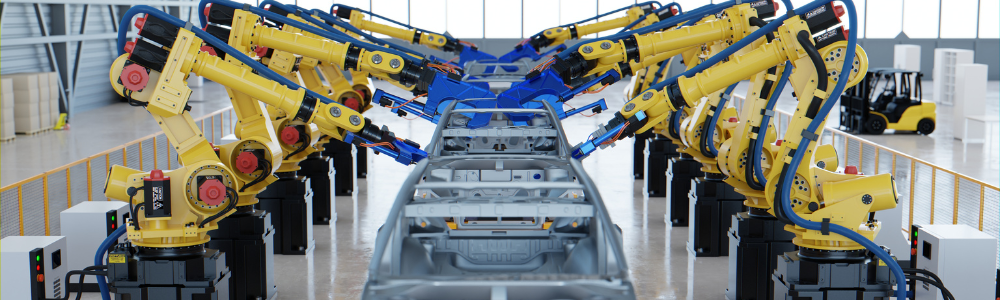

Many leading companies aim to use and benefit from artificial intelligence (AI). Of course, there are a few steps that must be completed before you can start using cognitive technology.
To begin with, machine learning and analytics are both necessary for AI. And you require a straightforward, elegant data architecture or information architecture to deal with analytics efficiently (IA). In other words, IA is a prerequisite for AI.
Real AI success depends on an organization’s capacity to adopt a data-driven culture.

AI Goal
Artificial intelligence is becoming more useful and expanding rapidly. Artificial intelligence is the capacity for a computer or system to analyse and gain knowledge from experience. Over the past few years, AI applications have considerably advanced, and they are now used in practically every industry.
AI makes data accessible and simple for everyone. It empowers businesses to plant the seeds of a data environment with a realistic strategy to achieve success. Or, to put it another way, it helps businesses use data science more quickly. When that happens, the power of data is unleashed, the outcomes are visible, and the advantages are obvious.
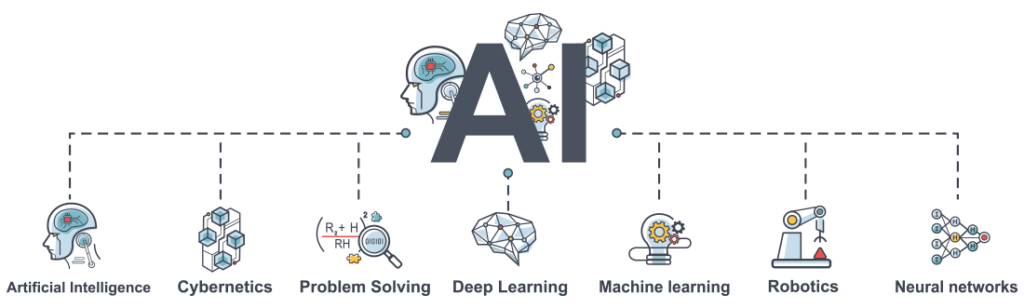
Artificial intelligence (AI) is the intelligence that machines display and may be programmed to imitate human behavior or thought processes. Deep Learning and machine learning methods are combined to create AI. Artificial intelligence algorithms that have been trained using enormous amounts of data are capable of making intelligent decisions.
Fact of AI and Statistics
The market for software based on artificial intelligence (AI) is anticipated to generate 126 billion dollars in revenue by 2025, according to Statista.
Broad application areas of AI

1. Education Industry
The education sector is the one that is most influenced by humans, but artificial intelligence has also started to make progress there. This progressive adoption of AI has helped faculty members become more successful and refocus their attention on students rather than office or administrative tasks.

2. Robotics
Another industry that frequently employs artificial intelligence applications is robotics. AI-powered robots employ real-time updates to detect obstructions in their way and instantly design their routes.
It can be applied to
- Transporting commodities in warehouses, factories, and hospitals
- Maintaining huge equipment and office buildings
- Inventory control
In fact, AI in Robotics is itself one area of research

3. Healthcare
Numerous uses of artificial intelligence are found in the healthcare industry. Building advanced devices that can detect diseases and identify cancer cells using AI applications. In order to ensure early diagnosis, artificial intelligence can assist in analysing chronic illnesses with lab and other medical data. AI employs a combination of medical knowledge and historical data to find new medications

4. Agriculture
Defects and nutrient imbalances in the soil are found using artificial intelligence. AI can determine where weeds are growing by using computer vision, robotics, and machine learning technologies. AI bots can pick crops more quickly and in greater quantities than human employees.

5. Gaming
The gaming industry is another area where AI technologies have gained popularity. AI can be used to develop intelligent, human-like NPCs that communicate with players. In order to improve game design and testing, it can also be used to forecast human behavior.

6. Banking Industry
The banking industry can manage record-level, high-speed data using artificial intelligence to gain insightful information. Also contributing to high-quality services for a larger customer base are features like biometric fraud detection systems, AI bots, and digital payments.

7. Government
The public sector and the government stand to benefit greatly from incorporating AI into every element of their jobs. The application of AI in government must take into account evolving workloads, privacy and security concerns, and system compatibility with old systems.

8. Manufacturing
Artificial intelligence (AI) in manufacturing refers to the use of technology to automate hard work and identify previously unidentified patterns in manufacturing processes or workflows. Every manufacturer search for novel ways to increase profits, decrease risks, and boost overall production effectiveness. This is essential to securing their survival and a prosperous, sustainable future.
9. Finance
Corporate finance greatly benefits from AI since it can more accurately identify and evaluate credit risks. Machine learning and other AI technologies can enhance loan underwriting and reduce financial risk for businesses wanting to raise their value. Implementing AI in finance has enormous advantages for task automation, fraud detection, and providing individualized suggestions. The following are some examples of how AI use cases in the front and middle office can help to modernize the financial sector:
- Enabling smooth, 24 hour customer relationships
- Minimising the need for repetitive tasks
- Reducing human error and erroneous positives
- Saving the money

10. Automobiles
The most widely used application of artificial intelligence in the automobile sector is testing vehicles. Model-based testing procedures will be implemented, and AI and ML systems will test and measure vehicle performance around the clock. Furthermore, manufacturers can create hundreds of prototypes of products and parts with the help of ML algorithms. These design-related facts can help manufacturers release a trendy model on the market. In order to ensure automation in product design and testing, the use of artificial intelligence in automotive testing is also noteworthy.